
Resistance Isn’t Futile
What I learned researching a man who was arrested for owning a book
Run It Back offers carefully researched articles on lesser told parts of black history. But I’m only able to do this work with your help. Please consider getting a paid subscription to Run It Back to help me keep writing these stories and making them widely available to students, educators and lifelong learners.
I have been writing a lot about resistance lately–resistance as organizing, resistance as truthtelling, resistance as violence. In the digital era resistance was memed into something docile and performative, an aestheticized activism conveyed through hashtags and social justice infographics. But for most of American history resistance has carried with it the potential of retaliation from the state. When the state is operating at its full capacity for violence and surveillance, to resist is to risk everything.
Yet America has always had resisters. We valorize a few of them after the fact and give them an angelic aura–the better to make their achievements seem divine and otherworldly. But resistance is a more collective labor, built on networks of communal trust and shared risk. At its most effective, resistance is not about a singular gallant moment, but about building the infrastructure to support the world you want to see, piece by piece.
—
This month for Smithsonian Magazine I wrote about a resister named Sam Green. He was a farmer, a preacher, a husband, a father. He was arrested and imprisoned for the crime of owning Uncle Tom’s Cabin, the famous antislavery novel by Harriet Beecher Stowe.
Originally, the piece was going to be more about Uncle Tom’s Cabin itself and the various ways in which pro-slavery Southerners tried to censor the book. But my editor perceptively steered me toward a story more focused on Green and the resistance networks he circulated through in Maryland. Green was a co-founder of a black Methodist Church, an attendee at the Convention of Free Colored People, and—most gallingly to his white, slaveowning neighbors—a conductor on the Underground Railroad. He worked closely with Harriet Tubman and was involved in some of the most dramatic escapes of the era (read about the Dover Eight, who Green likely aided, if you haven’t). Green opened up his home to Tubman and the many runaway slaves she led to freedom, while using his position as an upstanding citizen in East New Market, Maryland to gather intelligence in both the black and white worlds.
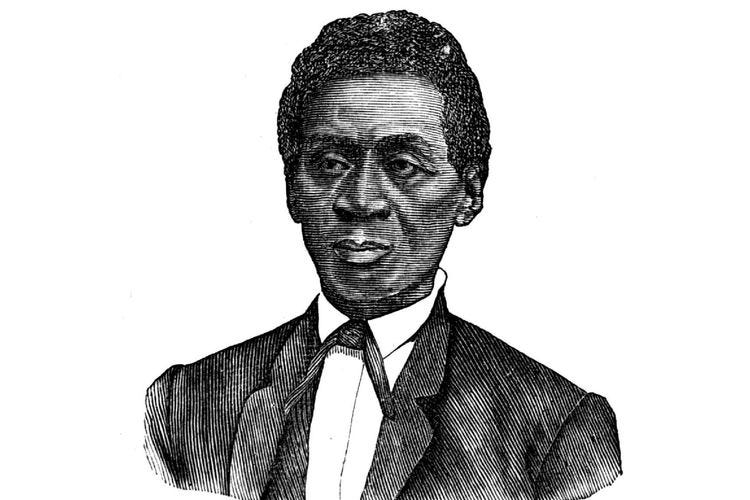
Green’s arrest, I quickly discovered, was not about owning a book—it was about making every other free black person in Maryland think twice before opposing slavery. As a nation’s actions become more difficult for the average person to morally reconcile, its government has to work harder to compel compliance. Laws are passed that limit free thought. Political propaganda becomes increasingly untethered from reality. Punishments double as public warnings. The Sam Green case neatly reinforced all three of those goals.
What fascinated me most about Green’s story, though, was how ordinary his life seemed day to day, and how little of it was documented. He was one of about 75,000 free black Marylanders at the time he was arrested. He left behind no diaries or grand soliloquies, and the few quotes I could find of his were quite modest. History doesn’t remember Green as a lionized hero; there isn’t an epic account of his record of his resistance. His legacy can only be pieced together through other people’s stories—their interpretations of his actions and brief mentions of his home as a refuge in narratives of grand slave escapes. Tubman herself mentioned Green in passing when describing her favored Underground Railroad routes in interviews decades after the Civil War. It was a small but significant piece of evidence that his home provided a piece of infrastructure for the freedom movement.
Sam Green’s story stands out because he was imprisoned for owning a book. But he was not the only one to open his home to people on a quest for liberty. The National Park Service lists more than 800 sites on the Underground Railroad across 41 states on its Network to Freedom. There were a lot of Sam Greens out there.
The work of Underground Railroad conductors was secretive by nature; Green himself no doubt would have preferred to remain anonymous than be made infamous for his unusual “crime.” But he, like others whose names we don’t know, insisted on a better America, even as he went to church, tilled his land, and read a book from time to time. Resisters are not superheroes; they’re our neighbors, co-workers, and relatives. They’re everyday people lending a hand to justice in their everyday lives. Once we understand that, we can find the strength to resist within ourselves.
Check out the full feature on Sam Green online or in the January/February print edition of Smithsonian Magazine.
Kriska Desir contributed to this report.
Resistance may not be futile.....but they can and do Retaliate.....
My husband was just telling me this story 2 nights ago!! After he had read your article. Well done! Incredible story.